Cloudflare is taking another step toward an internet designed for artificial intelligence with Cloudflare Kitesurf, a new headless browser built specifically for AI agents rather than human users.
The company has debuted Kitesurf as an agent-first browser running inside V8 isolates in Cloudflare Workers. The idea is to provide AI agents with a lightweight approach to rendering and interacting with web pages, avoiding the overhead of a traditional, fully featured browser. Cloudflare Kitesurf lets AI developers create software that can access websites, fill out forms, and do many browser-based tasks without needing to build or maintain their own browser infrastructure, making it much easier to create autonomous web-enabled agents.
That difference will matter as AI agents move beyond generating text and begin performing tasks on the web. Browser Run, which enables agents to open browsers, browse websites, click elements, fill forms, take screenshots, and extract data, has already made browser infrastructure a core part of its agent platform. The company also claims that Cloudflare Kitesurf uses much less CPU and memory than Chromium for common agentic tasks, such as screenshots and HTML extraction, further emphasizing its focus on lightweight, task-specific browser execution.
Cloudflare Kitesurf is not your standard kitesurf. Cloudflare’s approach was not to attempt to replicate every feature of a conventional Chromium browser but to build it with the workloads that AI agents are most likely to use in mind. The browser is intended for situations where you need speed, isolation, and scalability, but you don’t need complete pixel-perfect rendering.
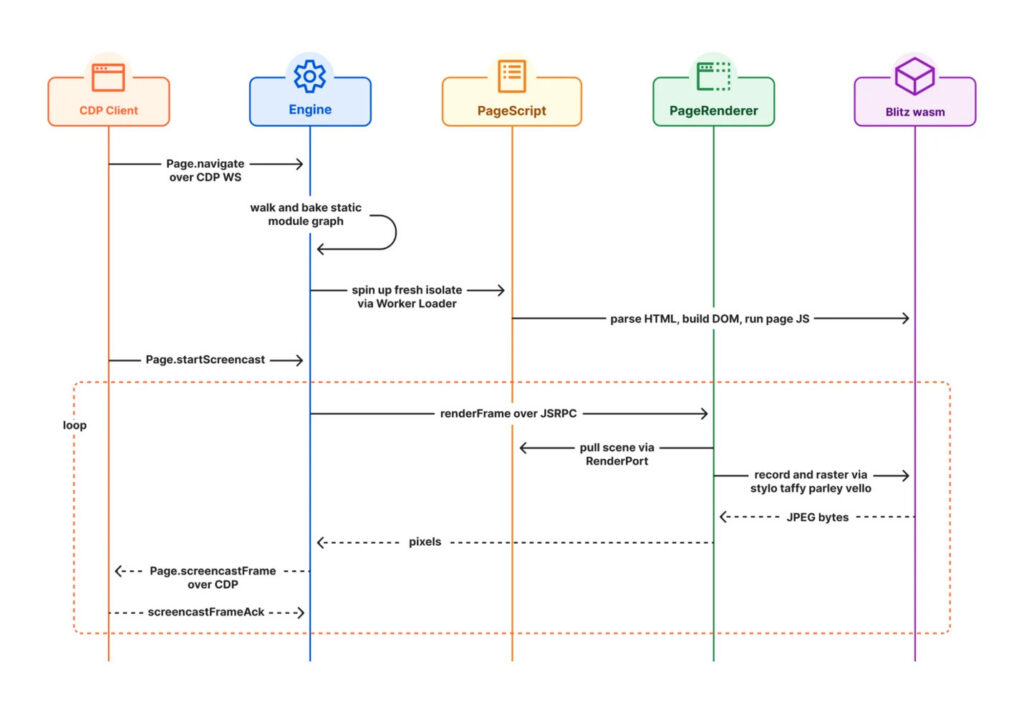
Cloudflare Kitesurf is an ephemeral, stateless engine that only exists for the duration of a task, making it well-suited for bursty, on-demand workloads where an AI agent may need to render a page, extract data, or complete a single operation before the browser instance is discarded, Cloudflare describes.
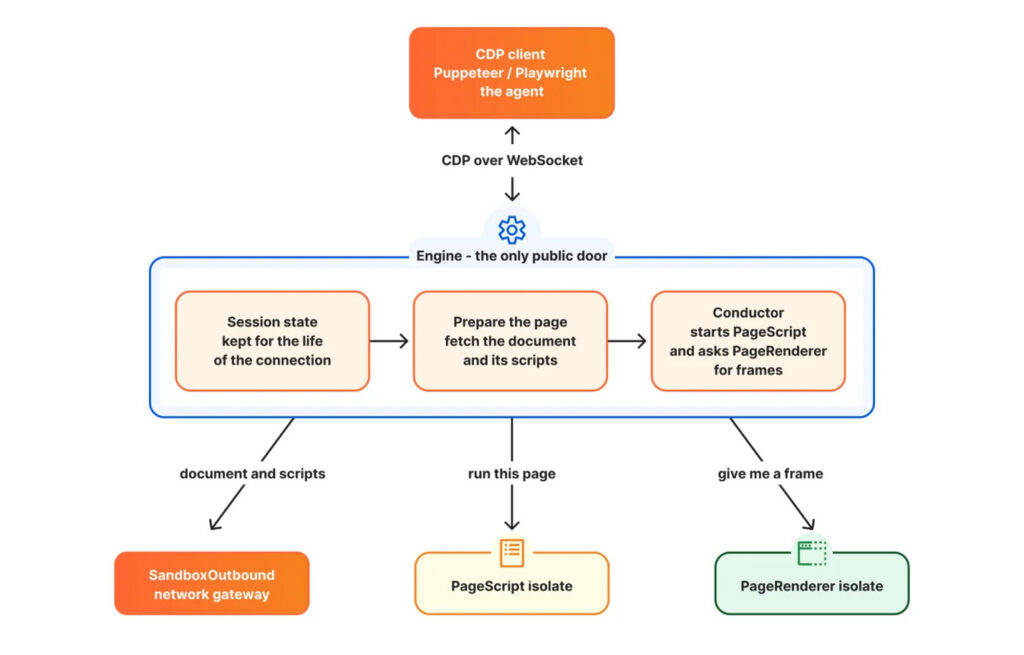
This system is based on a tightly controlled architecture, where all network access is routed through a single component, the sandbox outbound worker. Cloudflare’s Dynamic Workers model mandates that nothing else in the stack can reach the network directly.
Also Read: Apple’s Exciting OLED iPad Mini Could Launch in October With Major Display Upgrade
In this architecture, the only public-facing piece of Kitesurf is the engine itself. It exposes the Chrome DevTools Protocol (CDP) over WebSocket, a collection of HTTP REST APIs, and a lightweight landing page for internal testing and diagnostic purposes. Most importantly, the engine is responsible for maintaining and persisting the session state. All other components in the system are stateless by design.
At runtime, the engine bootstraps each session by fetching the main document along with its first scripts. Once this base is created, PageScript takes over and handles all further network activity, such as loading stylesheets, images, fonts, and whatever other requests the page may generate. This clean separation of duties means that all outbound requests are always mediated, fully observable, and securely isolated within the session lifecycle.
The technology behind kitesurfing is nothing to sneeze at, either. It leverages V8 isolates, the same core isolation technology that powers Cloudflare Workers. Isolates differ from regular virtual machines or containers in that they are quick to start up and use relatively little memory, making them a good fit for workloads with many short-lived executions. Previously, Cloudflare has said its dynamic. Workers technology can turn up isolates in milliseconds while using far less memory than traditional storage containers.
The launch also ties into Cloudflare’s broader push to build infrastructure for the emerging agentic web, where Cloudflare Kitesurf is a key player in that transition. The company has also expanded its platform with an agents SDK, browser run, dynamic workers, and sandboxing tools to help developers run AI agents at scale.
For developers, Cloudflare Kitesurf might be a more efficient alternative for browser-based automation where you don’t need a full desktop-class browser. It’s not a drop-in replacement for Chromium for all workloads, but its more focused design could make web interaction more practical for the growing number of AI agents expected to operate continuously and autonomously online.